The Report Nobody Reads
Every general superintendent I've worked with has said some version of the same thing: "We do daily reports. It's a requirement." And they're right — on most projects, someone fills out a daily report. It gets filed. And then, unless something goes wrong, nobody looks at it again.
That's a problem, because the daily report is quietly the most valuable document your field team produces. It's the only record that captures what actually happened on a given day — who was there, what they worked on, what conditions they faced, and what got in their way. Every other report in construction is a summary, an estimate, or a forecast. The daily report is the truth.
The issue isn't that contractors don't do daily reports. It's that most treat them as a compliance exercise rather than a strategic tool. When you shift that mindset — when you start treating daily reports as the foundation of your project data — everything downstream gets better: your cost tracking, your forecasting, your change order documentation, and your ability to resolve disputes before they become litigation.
What a Good Daily Report Actually Captures
Before we talk about how to use daily reports better, let's talk about what should be in them. Too many daily reports are vague — a few lines about what happened, maybe a weather note, and a signature. That's not useful to anyone.
A daily report that actually serves your business should capture:
- Labor details by crew and cost code — Not just headcount, but who worked where, on what activity, and for how many hours. This is the raw data that feeds your job cost system.
- Equipment usage — Which pieces of equipment were on site, which were actively working, and which were idle. Idle equipment is money sitting in the dirt.
- Production quantities — How much work was actually completed? Cubic yards moved, linear feet of pipe installed, tons of asphalt placed. Without quantities, you can't measure productivity.
- Weather and site conditions — Temperature, precipitation, wind, ground conditions. This matters for both scheduling decisions and potential weather-related claims.
- Delays and disruptions — Anything that prevented work from proceeding as planned. Material deliveries that didn't show up, utility conflicts, design changes communicated in the field, access issues.
- Safety observations — Incidents, near-misses, hazard identifications, and toolbox talk topics. These feed your safety program and create a documented record.
- Visitors and inspections — Who came to the site, what they inspected, and what the outcome was. Inspector visits, owner walk-throughs, and subcontractor coordination meetings all belong here.
That sounds like a lot, and it is. But the goal isn't to create paperwork for its own sake — it's to create a single, reliable record of each day that serves multiple purposes downstream.
The Cost Tracking Connection
Here's where daily reports start paying for themselves. If your foremen are capturing labor hours by cost code and production quantities every day, you have the raw ingredients for real-time job costing. You don't need to wait for payroll to process. You don't need to chase down timesheets at the end of the week. The data is there, captured at the source, on the day it happened.
I've seen contractors cut their cost reporting lag from two weeks to two days simply by improving the quality of their daily reports and feeding that data into their cost system. Two weeks of lag means you're making decisions based on information that's already stale. Two days of lag means you can catch a budget overrun while there's still time to do something about it.
The math is straightforward. If a foreman reports that Crew A spent 80 hours on a cost code that was budgeted for 60, and they installed 200 linear feet against a target of 300, you know immediately that you have a productivity problem on that activity. You don't need a monthly cost report to tell you that — the daily report already did.
Your Best Defense in a Dispute
Ask any construction attorney what they want most when a claim or dispute arises, and they'll tell you: contemporaneous documentation. That means records created at the time the events occurred — not reconstructed weeks or months later from memory. Daily reports are the gold standard of contemporaneous documentation.
When an owner disputes a delay claim, your daily reports are the evidence that shows exactly what happened. They show which days were impacted by rain, when materials arrived late, when design changes were issued in the field, and how your crews responded. Without that documentation, you're relying on memory and email threads — and memory is unreliable, and email threads are incomplete.
I've watched contractors leave hundreds of thousands of dollars on the table because they couldn't substantiate a legitimate delay claim. The work was impacted. The costs were real. But the documentation wasn't there to prove it. A consistent, detailed daily report practice would have made that claim straightforward.
The inverse is also true. Good daily reports protect you from unfounded claims. If a subcontractor alleges they were delayed by your operations on a specific date, and your daily report from that date shows clear access and no disruptions, you have a contemporaneous record that contradicts the claim.
Why Foremen Hold the Key
The quality of your daily reports lives or dies with your foremen. They're the ones on the ground. They see what happens every day. They know which crews were productive and which ones struggled. They know about the utility conflict that cost two hours or the material shortage that forced a crew to switch activities.
But here's the tension: foremen are busy. They're managing crews, coordinating with subs, solving problems in real time, and keeping work moving. Asking them to spend 45 minutes at the end of every day filling out a detailed paper form is asking a lot — and it shows in the quality of what you get back.
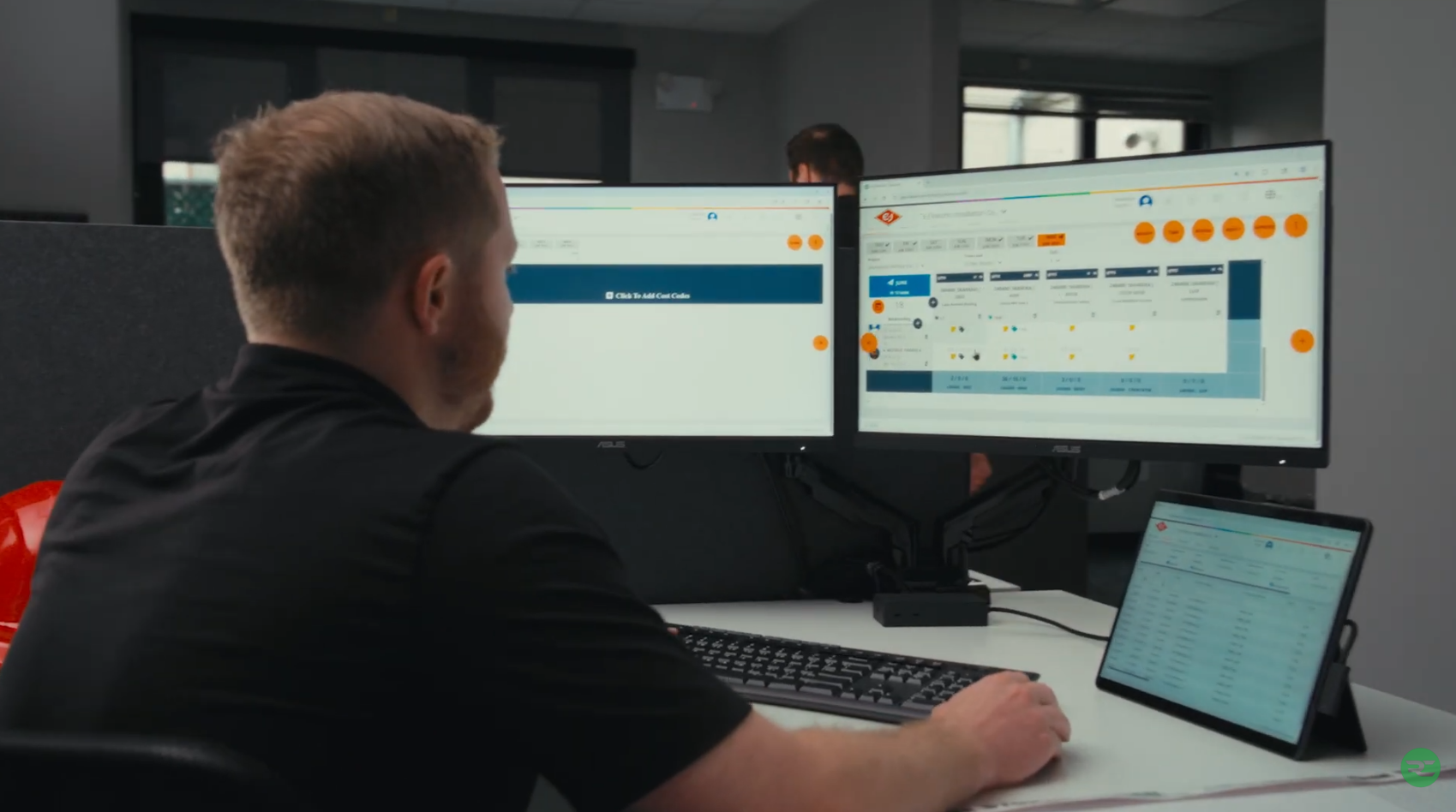
This is where the tool matters as much as the process. If daily reporting is a paper form or a clunky desktop application that requires the foreman to go back to the trailer, you'll get bare-minimum compliance. If it's a mobile tool that lets them capture data throughout the day — a few taps here, a quick note there — you'll get dramatically better information with less effort.
The best daily reporting I've seen happens when foremen don't even think of it as "filling out a report." They're just logging what happened as it happens: this crew started this activity at 7:00, we placed 150 yards of concrete by lunch, the inspector showed up at 2:00 and approved the pour. At the end of the day, the report is already done because the data was captured in real time.
From Documentation to Decision-Making
The real unlock with daily reports isn't just having better records — it's using those records to make better decisions. When daily report data flows into your project management and cost systems, patterns emerge that you can't see from any single day's report.
For example:
- Productivity trends — Are your crews getting more or less productive as the project progresses? Is Crew A consistently outperforming Crew B on the same activity? What's different about how they work?
- Weather impact analysis — How many days have you actually lost to weather this season? Is it tracking ahead of what you assumed in your bid? Do you need to adjust your schedule?
- Equipment utilization — That excavator you're renting — is it working 8 hours a day or sitting idle for half the shift? Should you swap it for a smaller machine or bring in a second one?
- Cost code performance — Which activities are on budget, which are over, and which are trending in the wrong direction? The earlier you see the trend, the more options you have to correct it.
None of these insights require sophisticated analytics software. They require consistent, accurate daily data — and someone who actually looks at it.
Making the Shift
If your daily reports today are a formality — a few lines in a notebook or a half-completed form — here's how to start getting real value from them:
- Define what "good" looks like. Create a standard for what a complete daily report includes. Make it specific: labor hours by cost code, production quantities with units, weather conditions, delays with causes and durations. If your foremen don't know what you expect, they'll default to the minimum.
- Make it easy to capture. Invest in a mobile tool that lets foremen log data from the field. The easier it is to enter information, the more information you'll get. Paper forms and end-of-day desktop entry are friction points that kill data quality.
- Close the feedback loop. If foremen never see how their daily data gets used, they'll treat it as busywork. Show them the cost report that their data feeds. Show them the productivity trend that their quantities create. When field teams understand that their daily input drives real decisions, the quality of that input goes up dramatically.
- Review daily reports weekly. Someone — a project manager, a superintendent — should be reviewing daily reports regularly. Not to police the foremen, but to catch gaps, ask clarifying questions, and spot issues early. A weekly review takes 30 minutes and often surfaces problems that would otherwise go unnoticed for weeks.
- Connect the data. Daily report data should flow into your cost system, your scheduling tool, and your forecasting process. If the data stays locked in a standalone report, you're capturing information but not using it. The value is in the connection.
The Compound Effect
One daily report doesn't change your business. But 200 daily reports across a 10-month project — captured consistently, with real detail — create something powerful. They create a complete, day-by-day record of how that project was built. They feed a cost system that catches overruns early. They support claims that would otherwise be unprovable. They reveal productivity patterns that help you bid the next job more accurately.
The contractors I've worked with who take daily reporting seriously don't just have better documentation. They have better visibility into their projects, make faster decisions, and protect their margins more effectively. And it all starts with a foreman, a phone, and five minutes at the end of each day.
The daily report isn't glamorous. It's not the kind of technology that gets featured at conferences. But if you're looking for a single change that will improve your field operations, your cost management, and your risk position all at once — this is it.